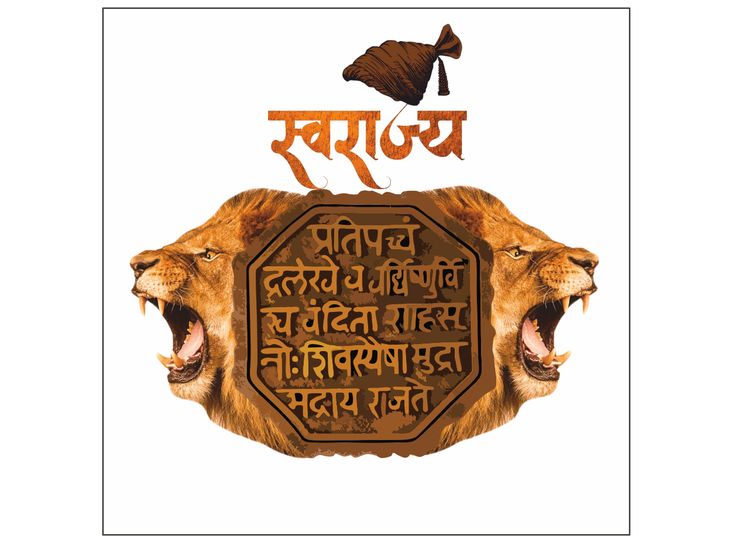
Hindavi Swarajya (meaning "Hindu self-rule" or "Hindu sovereignty") is a term associated with Chhatrapati Shivaji Maharaj, the founder of the Maratha Empire in the 17th century. The concept reflects his vision of an independent and sovereign kingdom based on Hindu principles, where the governance, military, and social structure would be based on Hindu values, customs, and traditions, rather than being under the control of foreign invaders, particularly the Mughal Empire.
Shivaji's idea of Hindavi Swarajya was rooted in:
Shivaji Maharaj believed that India should be governed by Indians, particularly by those from native communities who understood their culture and traditions. His aim was to establish a free and self-reliant state that was not under the rule of foreign powers like the Mughals.
Shivaji Maharaj placed significant emphasis on protecting Hindu culture, religion, and practices from foreign domination, especially from the Mughal Empire, which was perceived as threatening these traditions. His leadership aimed at preserving the autonomy of Hindus and safeguarding their religious freedom.
Shivaji was known for his progressive policies. He promoted social justice by encouraging a diverse group of people, including those from different castes, to participate in administration and military. He believed in a merit-based system of governance.
Shivaji strengthened his kingdom with a highly effective military and administrative setup. His state was well-organized, with local self-governance structures, and he built forts along the western coast of India to secure his empire against foreign powers.
Shivaji's Hindavi Swarajya was a revolutionary idea in the 17th century. It wasn't just about political independence but also about cultural and social self-determination. It aimed at creating a just and prosperous society for the Hindus, free from oppression and foreign rule.
Shahaji Maharaj, the father of Chhatrapati Shivaji Maharaj, was an important figure in the history of early Maratha politics. His reign and influence are often discussed in the context of his role as a military leader and his association with the Deccan Sultanates, particularly the Nizam Shahis of Ahmadnagar and the Bijapur Sultanate. Here is an outline of the key events and circumstances surrounding Shahaji Maharaj's life and his contribution to the development of Swarajya, which would later be fully realized by his son, Shivaji Maharaj.
Shahaji Maharaj
Shahaji Bhosale was born in 1594 into the Bhosale family, a Maratha warrior clan in the Deccan region. His early life was marked by his military prowess, and he gained recognition for his service to the Deccan Sultanates.
Shahaji's rise to power came as a result of his military service to the Sultanate of Ahmadnagar, and later to the Sultanate of Bijapur, where he became a powerful general.
Shahaji Maharaj, though not the direct founder of Swarajya, played a pivotal role in the early stages of the Maratha Empire. His military service, territorial acquisitions, and influence on his son, Shivaji, were instrumental in laying the foundation for the later success of the Maratha state and the establishment of Swarajya.
The ideals of independence, self-governance, and resistance to external powers that Shahaji imparted to Shivaji would become the cornerstone of the Maratha Empire, leading to the eventual rise of Swarajya under Shivaji's leadership.
In essence, Hindavi Swarajya symbolized freedom, self-governance, and a society rooted in Hindu values under the leadership of Shivaji Maharaj. His legacy continues to inspire pride in Indian nationalism and the values of self-rule and religious freedom.