1. Ancient Period: Local Kingdoms and Early Empires
Mauryas and Guptas (circa 3rd century BCE to 5th century CE)
Early Maharashtra was part of the Maurya (circa 322 BCE – 185 BCE) and Gupta (circa 320 CE – 550 CE) empires.
Under Ashoka the Great, the region spread Buddhism and several of Ashoka’s edicts were built here.
During the Gupta period, Maharashtra was part of the Gupta Empire, known for advancements in art, science, and culture.
Satavahanas (circa 2nd century BCE to 3rd century CE)
The Satavahanas ruled over much of the Deccan, including parts of Maharashtra, Telangana, and Andhra Pradesh.
They fostered trade, and their cultural landmarks include Ajanta and Ellora Caves.
2. Medieval Maharashtra: The Rise of the Rashtrakutas and Yadavas
Rashtrakutas (8th century to 10th century)
The Rashtrakutas rose to power in the 8th century, controlling much of Maharashtra, with their capital at Manyakheta (modern-day Karnataka).
They built the famous Ellora Caves and were known for their military and cultural contributions.
They were succeeded by the Chalukyas of Badami, but remained influential until the 10th century.
The Yadavas of Devagiri (12th century to 14th century)
The Yadavas ruled from their capital at Devagiri (Daulatabad), known for its strong fortifications.
They were known for administrative abilities and trade, but fell to the Delhi Sultanate in the early 14th century.
3. The Decline of Local Powers and Rise of the Delhi Sultanate
Muslim Invasions
From the 13th century, the Delhi Sultanate expanded into Maharashtra, beginning with Qutb-ud-Din Aibak’s campaigns.
The Delhi Sultanate later came under the Tughlaq dynasty in the 14th century.
The Bahmani Sultanate (14th century to 16th century)
The Bahmani Sultanate broke away from the Delhi Sultanate in the 14th century, becoming a dominant force in the Deccan.
After the Bahmani decline, the region was divided among the Deccan Sultanates, including the Nizam Shahi dynasty of Ahmadnagar, the Adil Shahi dynasty of Bijapur, and the Qutb Shahi dynasty of Golconda.
4. The Rise of the Mughals and the Fragmented Political Landscape
Mughal Influence
In the 17th century, the Mughal Empire, under Akbar, expanded into Maharashtra.
By Aurangzeb’s reign (1658–1707), the Mughals had full control over large parts of Maharashtra, including regions like Aurangabad and Jalna.
Mughal rule imposed heavy taxes and centralized control, which led to resentment among the local population, especially the Marathas.
5. The Feudal System and the Maratha Confederacy
Maharashtra before Shivaji Maharaj was a region marked by a feudal system, with local chieftains and landlords controlling smaller areas.
Many of these chieftains were initially vassals of the Bahmani Sultanate or the Mughals, but later gained autonomy and resisted foreign dominance.
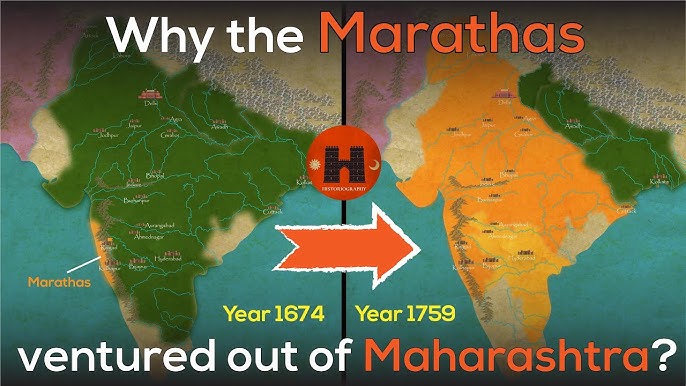
Shivaji Maharaj unified these local chieftains under the banner of Maratha Swarajya (self-rule), creating a unified Maratha force.
Conclusion: A Region in Transition
Maharashtra before Shivaji was diverse and fragmented, marked by ancient dynasties, foreign invasions, and local rulers.
This fragmented political landscape set the stage for the rise of the Maratha Empire, which Shivaji Maharaj established through his strategic leadership and unification of the Marathas.